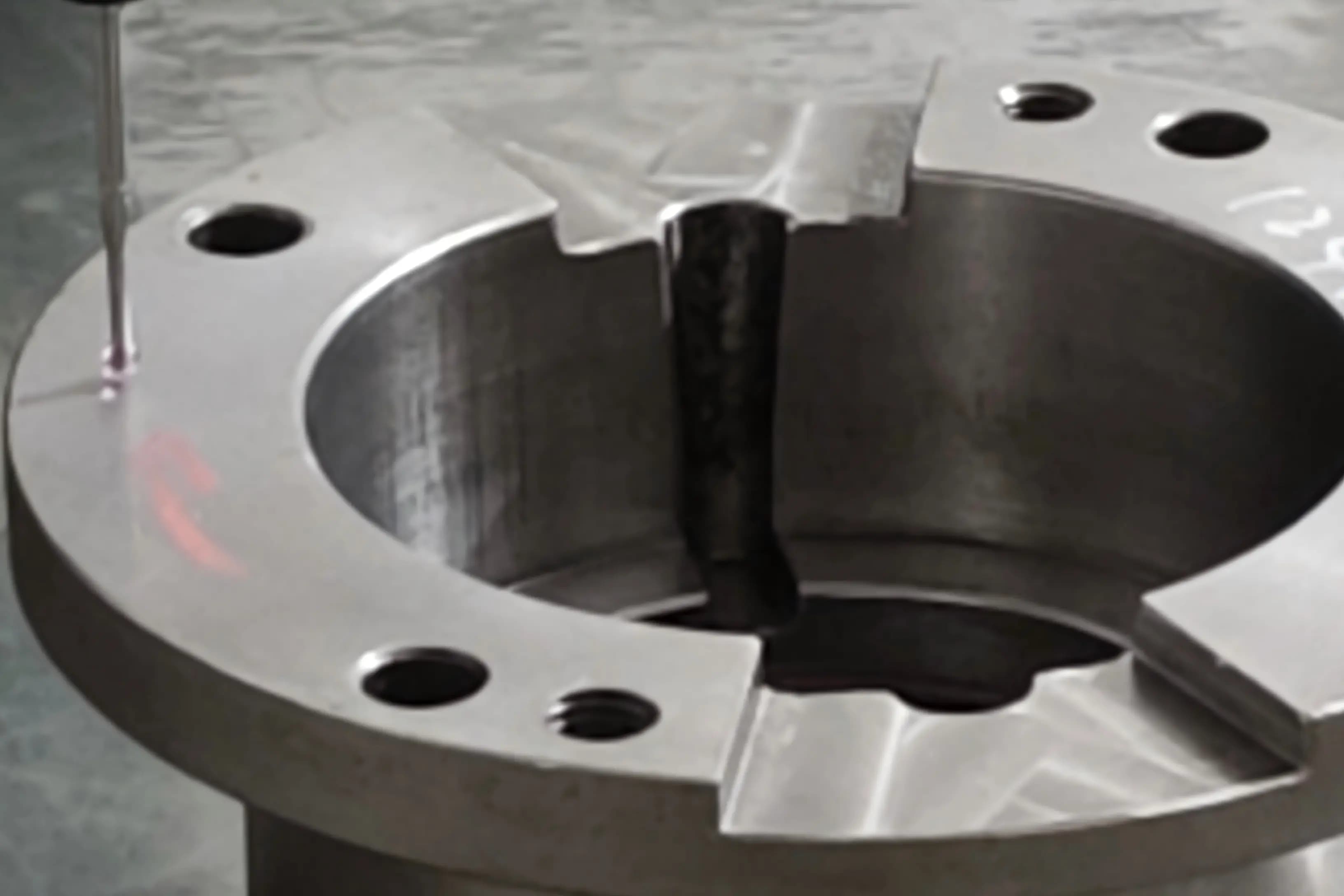
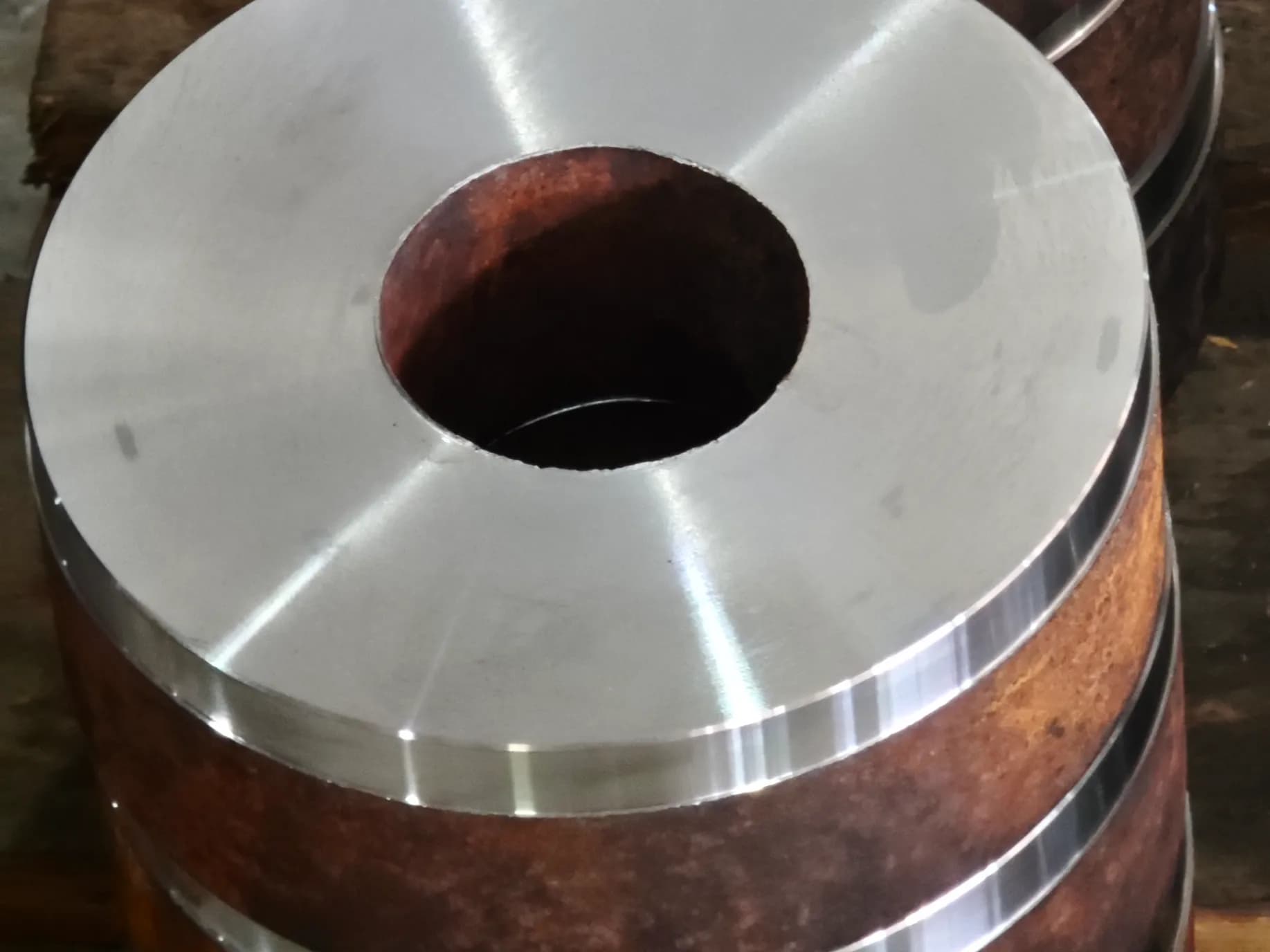
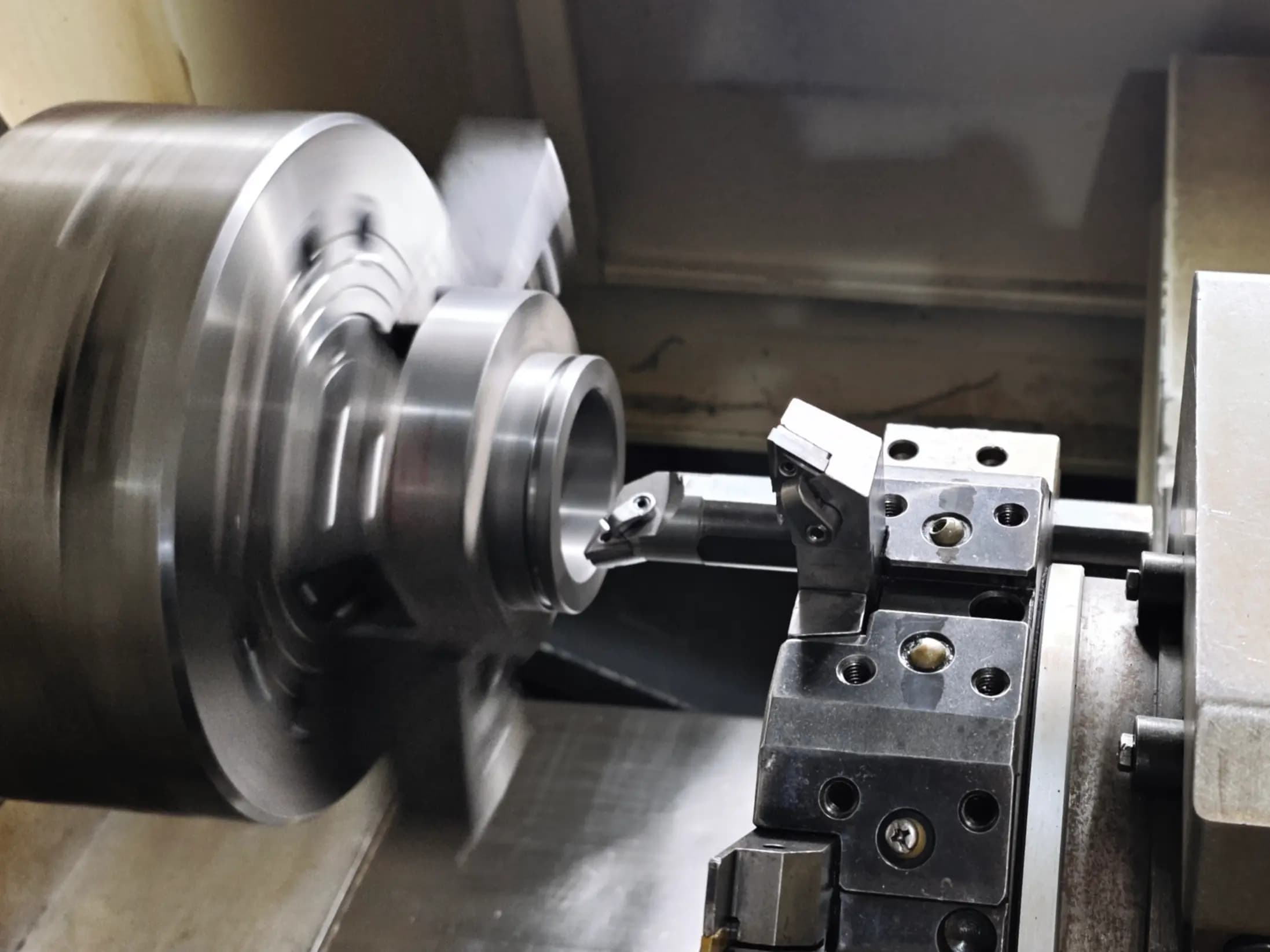
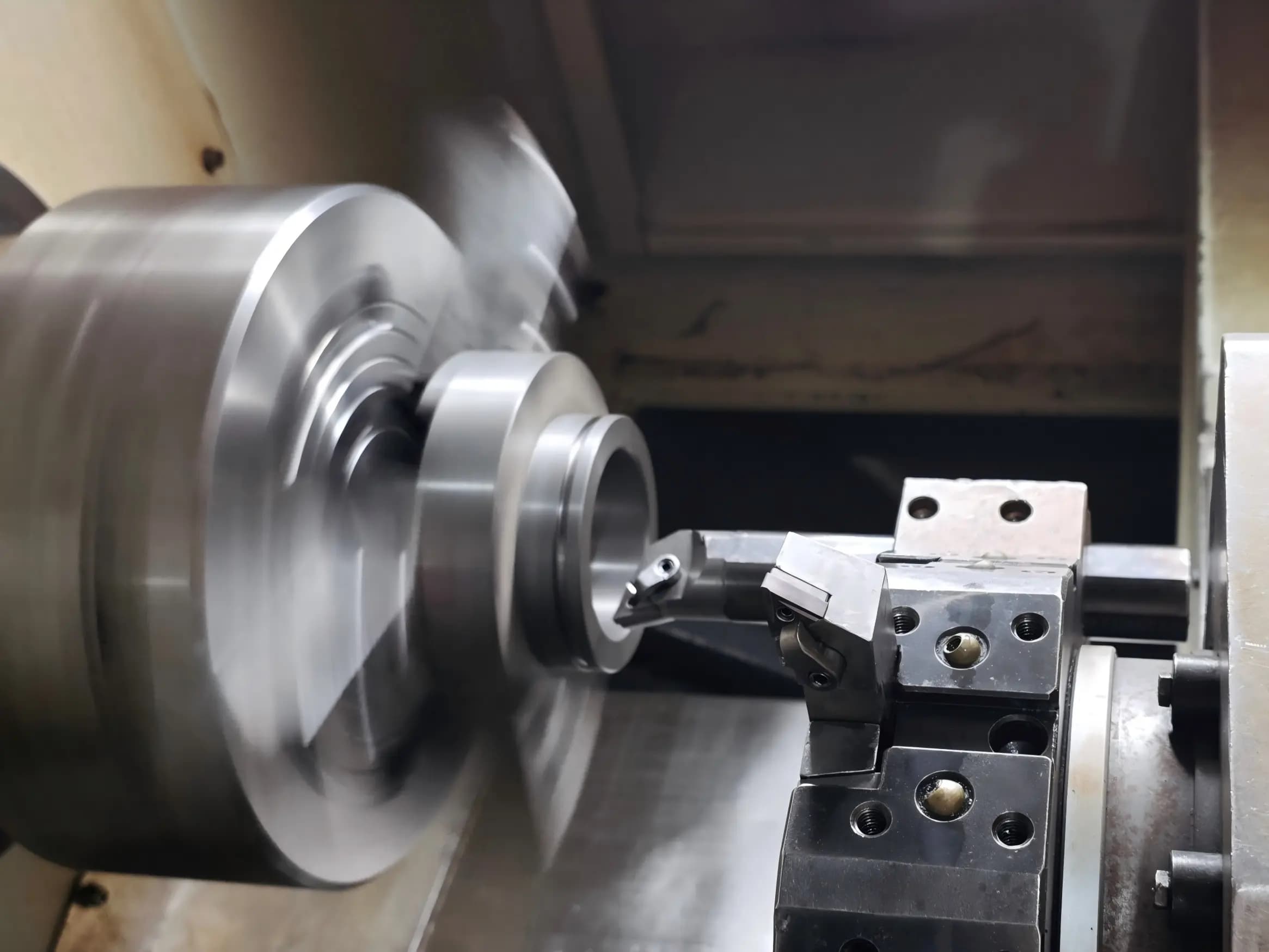
Precision CNC turning of a rotating equipment bearing housing on SCPM's heavy-duty CNC lathe in Zhejiang, China

Services

CNC Turning Services

From compressor and pump shafts to bushings and rotational housing components up to Ø800 × 2,000 mm — turned, threaded, and live-tool-milled in a single workholding setup wherever the geometry allows. Concentricity held to ≤ 0.01 mm TIR and surface finish down to Ra 0.4 µm.

Built To

  • Built to ISO 9001:2015 frameworkAligned9001:2015
  • Built to ISO 14001:2015 frameworkAligned14001:2015
  • Built to ISO 45001:2018 frameworkAligned45001:2018

Capability Snapshot

The numbers that matter on your drawing

Diameter tolerance

±0.005 mm

Concentricity (TIR)

≤ 0.01 mm

Surface finish (Ra)

0.4 µm

Max turning diameter

Ø800 mm

Max turning length

2,000 mm

Lead time (typical)

5 – 25 days

How we hold these numbers

  • Single-Chuck Machining: Whenever possible, shafts are roughed and finished in the same chucking setup. Minimizing re-chucking reduces cumulative alignment error and helps maintain concentricity between bearing journals, sealing surfaces, and other critical diameters.
  • Planned Secondary Operations: Cross-holes, flats, keyways, and other secondary features are completed on the lathe when live tooling allows. When additional machining is required, parts are transferred using established datum surfaces and documented setups to maintain positional accuracy.

Materials we worked

  • Carbon steel (A36, 1045)
  • Stainless steel (304, 316)
  • Ductile iron (class 35, Grade 65-45-12)

Equipment & Capacity

What We Run on the Floor

Rather than operating a large mix of unrelated equipment, we focus on the machines required for precision shafts, sleeves, housings, rotors, and other critical OEM components. This allows our team to maintain stable processes, consistent setups, and repeatable quality across production runs.

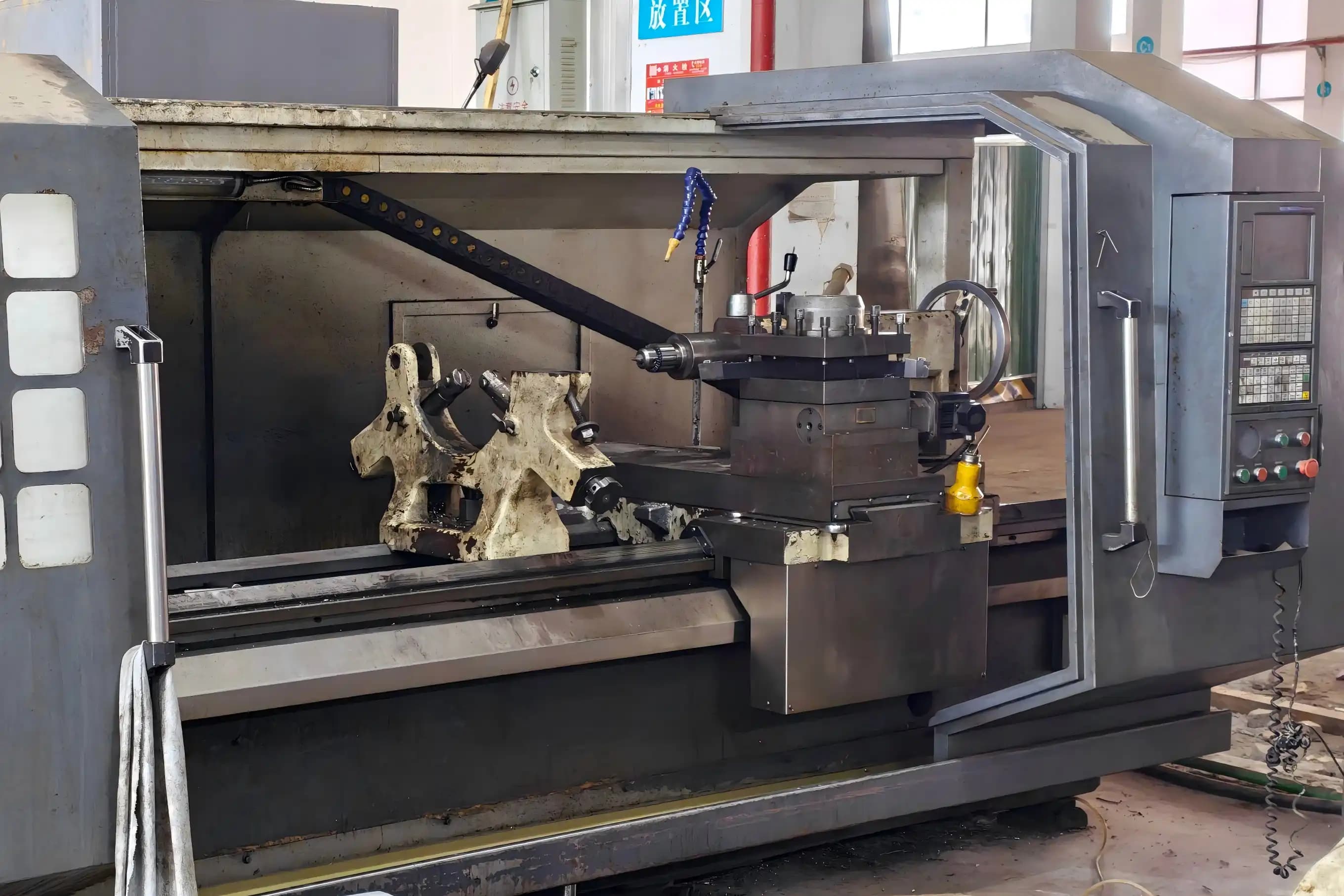
Heavy-Duty CNC Turning Center on SCPM's cnc turning floor

Heavy-Duty CNC Turning Center

Units
2
Max turning diameter
Ø800 mm
Max turning length
2,000 mm
Positioning tolerance
±0.02 mm
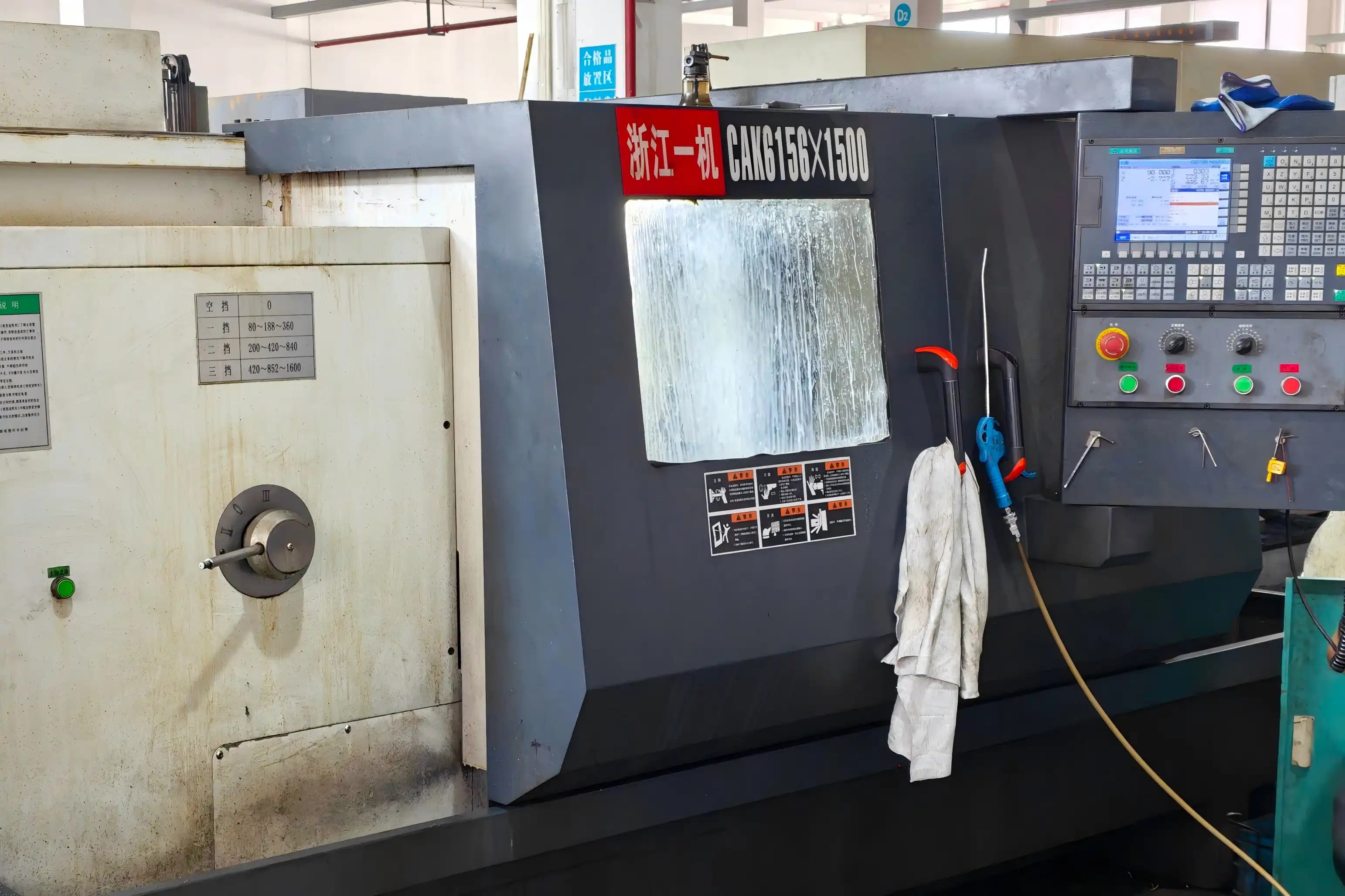
CNC Turning Center · CAK6156 × 1500 on SCPM's cnc turning floor

CNC Turning Center · CAK6156 × 1500

Units
4
Max turning diameter
Ø560 mm
Max turning length
1,500 mm
Positioning tolerance
±0.01 mm
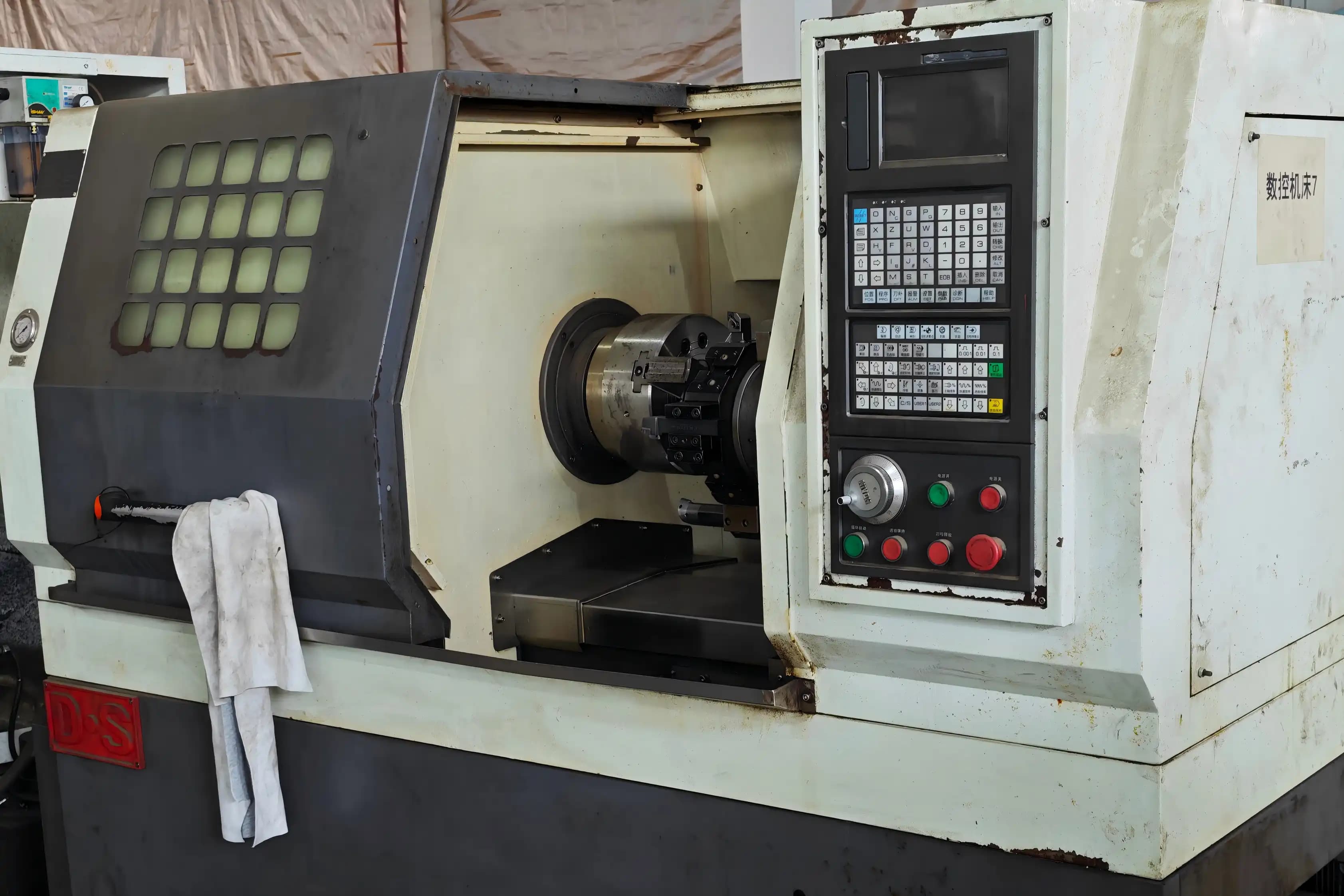
High-Precision CNC Lathe on SCPM's cnc turning floor

High-Precision CNC Lathe

Units
1
Max turning diameter
Ø350 mm
Max turning length
370 mm
Positioning tolerance
±0.005 mm

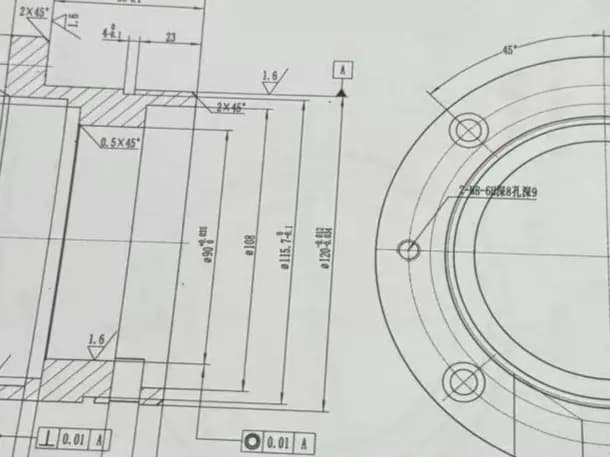
Drawing-Driven Precision Turning

Built for Rotating Equipment Components

Our turning experience comes from manufacturing shafts, bushings, sleeves, and other components used in rotating equipment. In these applications, concentricity, sealing surfaces, thread quality, and bearing fits all matter because they affect how the equipment performs in service. The same machining practices developed for those components are applied to the OEM turning work we manufacture under NDA.

Multi-Step Shaft Accuracy

Whenever possible, multi-step shafts are machined in a single chucking setup to maintain concentricity between bearing journals and other critical diameters. For long, slender shafts, steady rests are used during finishing operations to minimize deflection and improve dimensional stability.

Standard and Custom Threading

We machine metric, UN, ACME, trapezoidal, and other specified thread forms according to drawing requirements. Standard threads are verified with calibrated gauges, while custom profiles are inspected against customer-supplied or drawing-defined specifications.

Live-Tool Machining

Cross-holes, keyways, flats, and similar secondary features can be completed on the lathe using live tooling. When additional machining is required, established datum surfaces are used to maintain alignment between turned and milled features.

Quality & Inspection

Documentation you can hand to your QA

Every job is built around traceability. CMM data, material certificates, and inspection reports stay with the part file from RFQ to delivery.

CMM inspection of a precision-turned rotating equipment component on SCPM's granite-base measurement bench
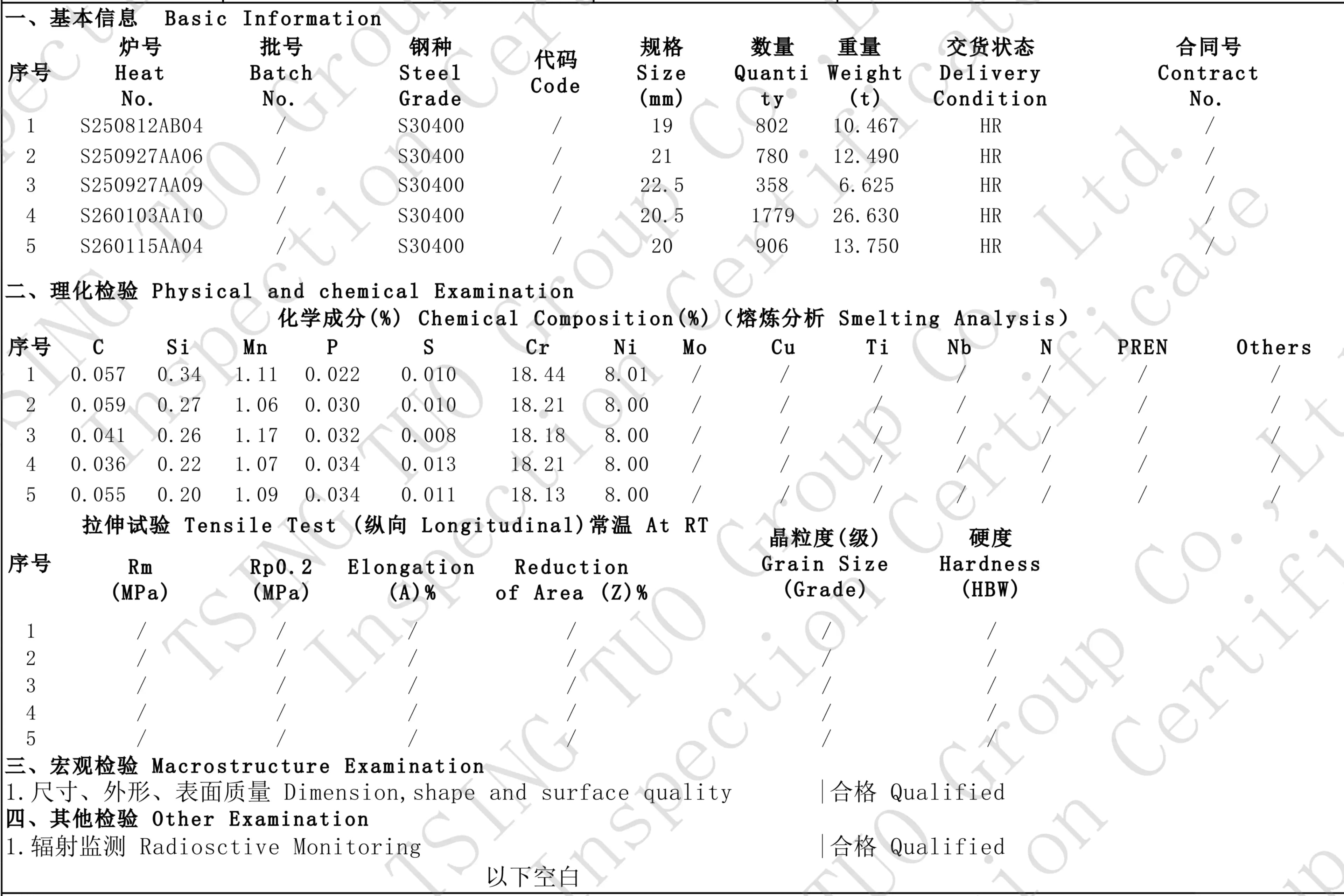
Material test certificate sample retained per heat lot for traceability of pump shaft steel

Concentricity Verification

TIR reported per drawing callout, every critical diameter.

Runout is measured between centers or in the specified inspection setup. Concentricity between journals and other critical diameters is verified against the tolerances defined on the drawing.

Thread Gauging

Ring & plug gauges for standard forms; profile checks for custom threads.

Metric, UN, ACME, trapezoidal, and other specified thread forms are inspected using calibrated gauges. Custom thread profiles are verified against customer specifications or approved reference gauges.

Material Traceability

MTC retained by heat lot.

Mill test certificates are maintained for each heat lot of raw material. Where heat treatment is required, hardness is verified before final machining or grinding operations.

First-Article & In-Process Inspection

Verified at setup, monitored throughout production.

A first-article inspection is completed before production begins. Critical dimensions are then checked at defined intervals during manufacturing to ensure continued compliance with drawing requirements.

Our Process

From RFQ to delivery

  1. CNC Turning workflow — Step 1: RFQ & Drawing Review
    Step 01

    RFQ & Drawing Review

    Material specifications, tolerances, thread requirements, and critical dimensions are reviewed before quotation.

  2. CNC Turning workflow — Step 2: Material Preparation
    Step 02

    Material Preparation

    Bar stock, forgings, or customer-supplied material are verified and prepared for machining.

  3. CNC Turning workflow — Step 3: CNC Turning
    Step 03

    CNC Turning

    Roughing and finishing operations are completed according to the drawing, with particular attention to concentricity, surface finish, and critical fits.

  4. CNC Turning workflow — Step 4: Secondary Machining
    Step 04

    Secondary Machining

    Threads, grooves, cross-holes, keyways, and other required features are machined and verified.

  5. CNC Turning workflow — Step 5: Inspection & Delivery
    Step 05

    Inspection & Delivery

    Dimensions, runout, thread forms, and other specified characteristics are inspected before packaging and shipment.

Related Reading

From our engineering notes

Long-form pieces our team has written from real shop-floor work, with the trade-offs and decisions behind them.

Finishing Add-On

Need finishing on these parts?

Anodize, passivation, plating, powder coating, bead blast, polish, and water-based spray paint coordinated through SCPM as a packaged add-on to your cnc turning order — one drawing, one PO, no separate finishing supplier to manage.

See the coordination model →

Common Questions

Frequently asked about cnc turning

What is your maximum turning diameter and length?

Up to Ø800 × 2,000 mm on our heavy-duty CNC turning center. Mid-size parts run on two Ø450 × 1,500 mm turning centers (±0.01 mm), and short tight-tolerance parts on a dedicated high-precision lathe (Ø350 × 370 mm, ±0.005 mm). The job is sized to the right platform rather than over-machined on the wrong one.

Can you turn threaded components?

Yes. We cut both standard and custom thread forms including metric, UN, ACME, and trapezoidal profiles. Standard threads are verified with go/no-go gauges; custom forms with profile gauges either sourced from the drawing or supplied with the RFQ.

How do you control concentricity on multi-step shafts?

By minimizing re-chucking — multi-step diameters are roughed and finished within the same workholding setup wherever the geometry allows. Long shafts (L/D > 8) are supported with steady rests during finishing. Concentricity is verified with runout gauging per the drawing's tolerance callout.

Do you offer live tooling and milling on the lathe?

Yes. Our turning centers include live tooling for cross-drilling, slotting, keyway, and flat milling without removing the part. Features that exceed live-tool capacity are routed deliberately to a machining center with the turned datum protected.

Do you have a minimum order quantity?

No MOQ — we accept 1-piece prototypes through repeat OEM production. For 1-piece work we may apply a one-time setup fee depending on tooling complexity; this is quoted up front, not surprised on invoice.

What is your typical lead time?

5 – 25 working days depending on quantity, material lead time, and secondary operations. Prototypes (1–10 pieces) typically run 5–10 working days; small batches (10–100) run 10–15 days; production batches over 100 pieces depend on the specific job and are quoted with a firm date.

Which materials can you turn?

We focus on carbon steel (A36, 1045), stainless steel (304, 316), and ductile iron (Class 35, Grade 65-45-12) — the grades we run daily on industrial OEM work. If your drawing calls for something close to these, send it over and we'll confirm whether we can source and machine it before we quote.

Ready to discuss your part?

Send us your drawings and we'll review them — no commitment required.

Request a Quote