
The path we went through
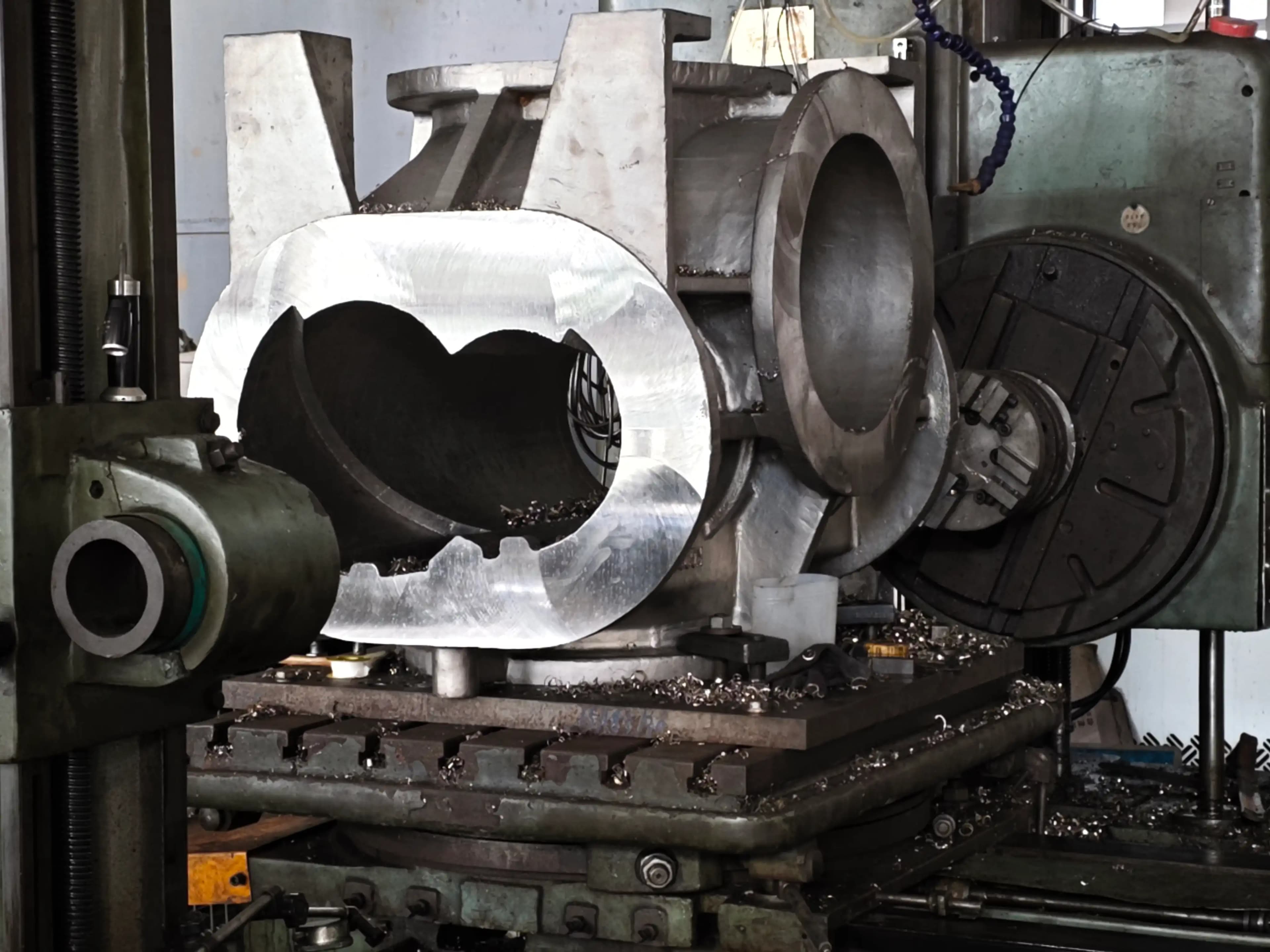
Back when I was doing dry screw vacuum pump R&D, my team would put out a new housing version every couple of weeks, hunting for whatever change would push performance or efficiency up. Drawing a new model on screen is the easy part. Getting a blank in your hands to machine and test is the hard part. Years of iterating pushed us toward two routes that both work at pilot quantities — lost-foam casting and welded fabrication. Both get used regularly, and the pick comes down to three things: per-kg cost, blank lead time, and whether the geometry has any complex internal features.
How we choose
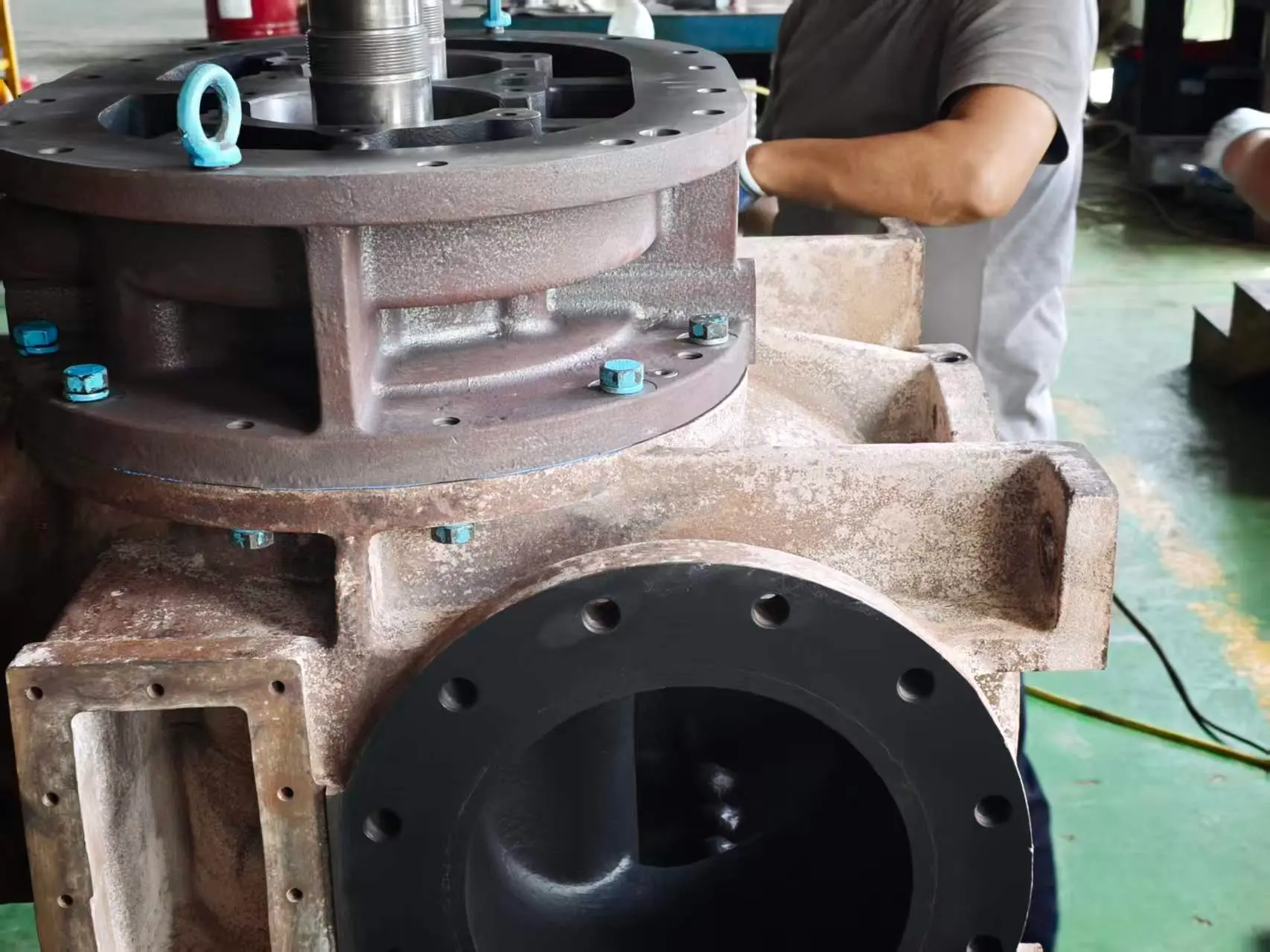
Does the geometry need cored internals? Casting is forced only when an internal feature both needs a machined finish and sits where the cutter can't reach it. Internal volumes that don't need precision — cooling jackets are the canonical case, since flow doesn't care if the walls come off as-cast or as-welded — fit inside a welded body just fine. If both conditions hit, plan around the 45–60 day lost-foam lead time and move on. If only one (or neither), this question doesn't force the route — the next two decide.
Is the design frozen? If you're still iterating between unit 2 and unit 3, weld. A plate re-cut and a fresh weld absorb a bore-spacing tweak or a flange relocation inside a week. A new foam pattern is faster than re-tooling a sand mold, but it still adds days, and any change that touched the pour gating needs re-validation.
Does the calendar have room? If the design is locked and the next milestone is 2+ months out, lost-foam pays you back on per-kg cost and saves the re-qualification work when production later runs off the same blank source. If the validation window is tight, weld and accept the ~25% per-kg premium for the 30–45 days of schedule it buys.
Cost, schedule, and capability, side by side
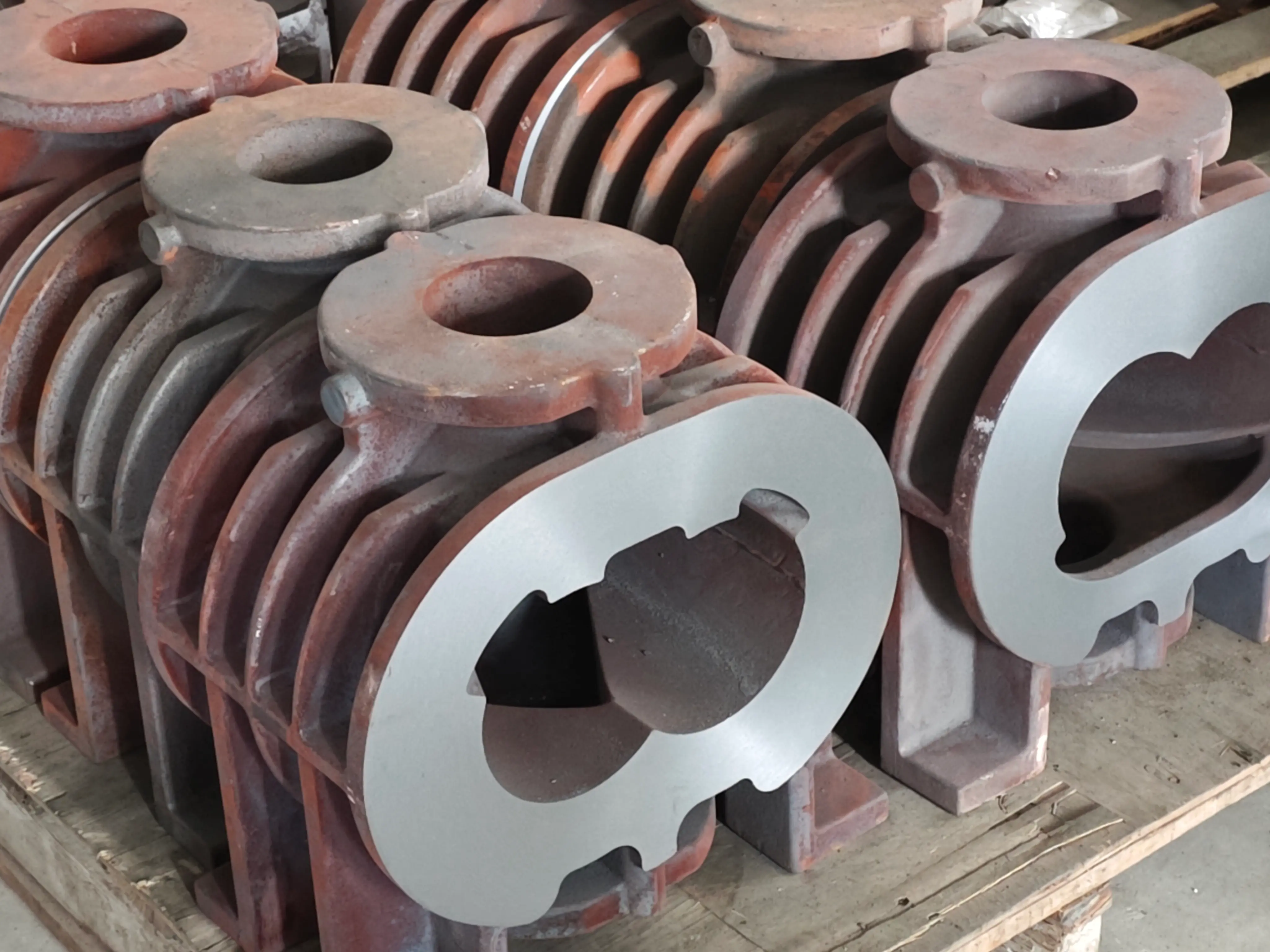
Numbers below are for a representative dry screw vacuum pump housing in the 175–238 mm bore-centerline class, pilot batch of 3 pieces in 316 stainless. Sizes and alloys move the absolute numbers, but the ratios hold.
| Dimension | Lost-foam casting | Welded fabrication | Verdict |
|---|---|---|---|
| Cost per kg of blank weight (316 SS) | ~$20/kg | ~$25/kg | Welded carries a ~25% per-kg premium |
| Hard tooling minimum | None — foam pattern is per part | None — no fixture or die investment | Tie — both are pilot-friendly, no MOQ from tooling |
| Machining-ready blank lead time after drawing approval | 45–60 days | 5–15 days | Welding faster by 30–45 days |
| Sunk cost if change hits mid-build | Foam pattern and poured blank both scrap | Plate sometimes re-cuttable; welding labor is the loss | Welded — far less to throw away |
| Internal cavity complexity | Undercuts, cored passages with finish requirements, curved internal ribbing OK | Limited to what the welder fits up and the cutter reaches | Lost-foam — required when an unreachable feature needs a machined finish |
| Wall thickness control | Casting allowance 3–5 mm; thin walls feasible | Plate thickness is exact off the shear | Tie — both work for typical housing walls |
| Rotor-bore parallelism (ASME Y14.5-2018) | 0.01 mm | 0.01 mm | Tie — finishing decides, not the blank |
| Use when | Design frozen, schedule allows, or geometry needs cored internals | Design still iterating, or validation window is tight | — |
If the drawing itself is still open on material, the route decision should sit after the material decision; we've covered that separately in 304/316 stainless vs ASTM A48 Class 35 for dry screw pump housings.
Two things that might go against your intuition
The cost gap reads backwards from the usual assumption that welding is the cheap pilot option. A welded blank starts from oversize plate sized for fit-up, machining allowance, and weld-shrinkage margin, and roughly half of what you pay for leaves as chips before the housing is finished. Lost-foam comes out close to net shape — 3–5 mm of machining allowance on critical surfaces — so almost the entire blank stays on the part. The ~25% per-kg premium in the table above understates the gap: a welded blank also weighs roughly 2× the finished housing, so the cost difference per finished housing lands well above 25%.
The capability gap is the second one — most buyers expect a finish-quality difference between cast and welded housings that doesn't show up on the finished surfaces. A dry screw housing has two precision jobs: parallelism and pitch of the two rotor bores, and flatness and Ra 0.8 µm (ISO 21920-2:2021) on the sealing lands where the end covers and discharge flange mate. Both are finish-machined features. The blank only needs to be dimensionally close enough to fixture and carry enough stock on the critical surfaces for the finishing cuts to clean up. Bore both rotor bores in one fixturing on a 4-axis horizontal machining center, indexed off one datum on the end-cover mating face, and the parallelism comes off the machine's own positioning — same on both welded and lost-foam blanks. The principle here — that fewer setups beat tighter machines on multi-feature parts — is the same one covered in setup count: the hidden cost in complex part machining.
When the welded route is the right call
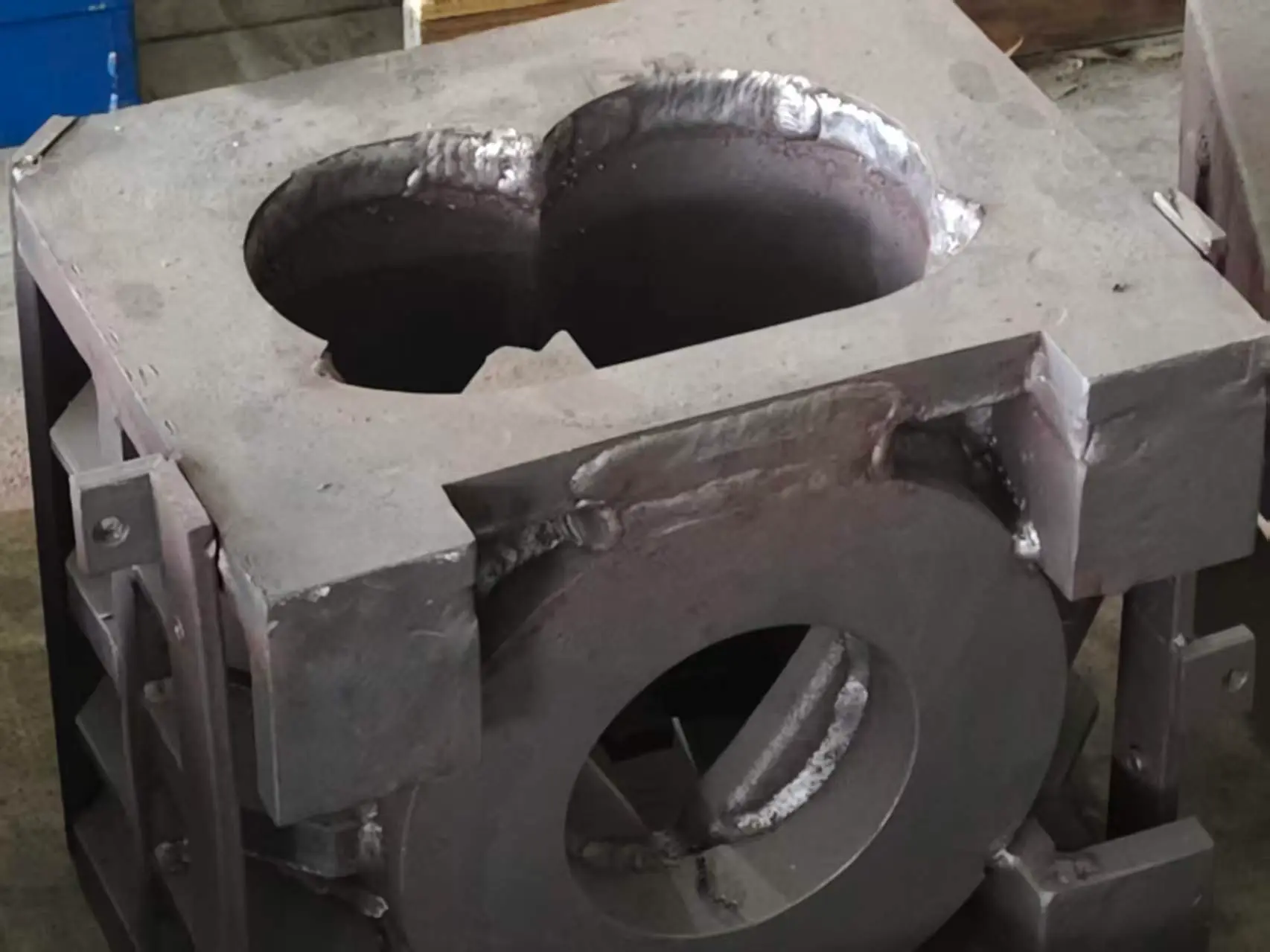
Welding is the schedule answer, and a few pilot situations push toward it almost every time:
- The design is still iterating. When unit 2's test results may change unit 3's drawing, a welded blank absorbs a bore-spacing tweak or a flange relocation with a new plate cut and a fresh weld inside a week.
- The validation window is tight. Counting drawing approval through to a part you can install (machining included), welding lands at roughly 2–4 weeks and lost-foam at 7–10 weeks. The blank-only numbers in the table above are tighter; here we count the whole job. If your pump build slot, customer demo, or test rig commissioning is inside that gap, the cost premium is the cheap part of the decision.
- It's a one-off or retrofit. A single housing to replace a damaged unit, or a single proof-of-concept build, doesn't amortize the 45-day pattern lead time even when the geometry would cast cleanly.
Inside our shop, a 316 stainless welded blank goes plate cut → fit-up → TIG weld → outsourced sub-critical anneal at 600–650 °C (about a day round-trip with our heat-treat partner) → rough machining → 4-axis horizontal for the rotor bores → finish machining and leak test. The weld and machining are in-house; only the anneal goes out. For more on how we hold the rotor-bore tolerances on welded housings, see our dry screw vacuum pump housing machining scope.
When lost-foam casting is the right call
Lost-foam is the cost-and-capability answer when the schedule allows. Three situations make it the obvious pick:
- The pilot is the qualification build for production. If the production plan is 50+ housings per year off the same drawing, running pilot units on lost-foam means the pilot blanks and the production blanks come from the same process — no re-qualification when volume ramps.
- The geometry needs it. Complex ribbing between the rotor bores, curved gas-path volumes, cored passages squeezed into tight space where the cutter can't reach but a machined finish is still required — these force lost-foam regardless of schedule.
- The design is frozen and the calendar has room. With sign-off in place and the next milestone 2+ months out, lost-foam saves the per-kg gap on a 250–400 kg blank, multiplied across a 3–5 piece pilot, against zero schedule downside.
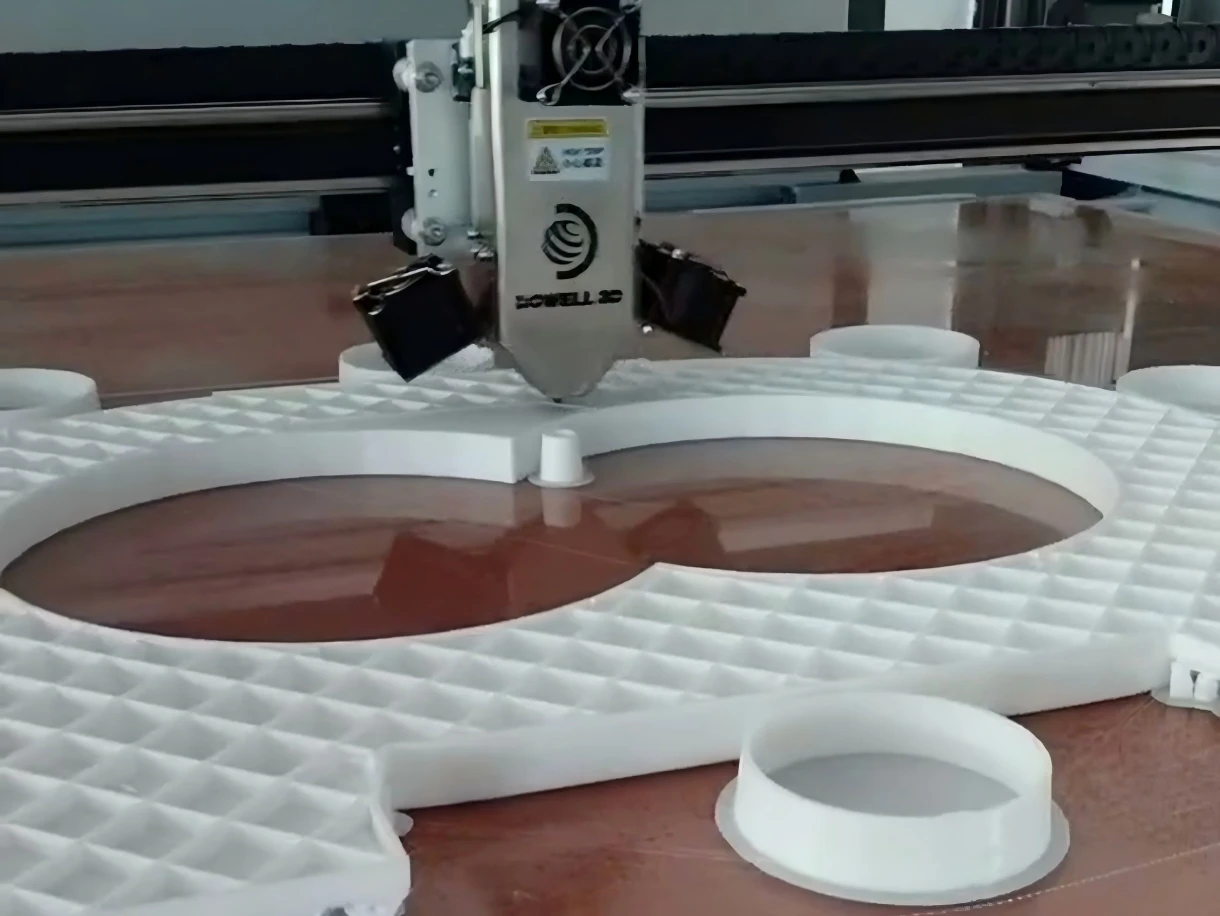
At our foundry partner the blank goes 3D-printed foam pattern → refractory slurry coating → mold prep → pour → cooldown → fettling → dimensional qualification, then ships to our shop for machining, inspection, and leak test. We coordinate the dimensional qualification with the foundry directly so the blank lands in our cell ready to fixture.
How we'd pick for you
A pilot housing decision that looks like a cost choice is almost always a schedule choice in disguise. The per-kg gap between cast and welded is real but small relative to the 3–8 week schedule gap, and on a frozen design with cored internals the cost trade goes lost-foam's way anyway. Lead with the date you need the part and the geometry you're trying to hit; those two inputs decide the route.
FAQ
Can a welded housing hold vacuum as well as a cast one?
Yes. Every finish-machined housing — welded or cast — gets a leak test before it leaves our shop, and only the ones that pass go into assembly.
Isn't welding supposed to be the cheap pilot route?
A welded blank weighs roughly 2× the finished housing because it starts from oversize plate, so a lot of the material you pay for gets cut to chips during machining. Add welding labor and consumables on top of that material cost, and the welded route ends up more expensive per housing than lost-foam. It's faster, not cheaper.
How much extra machining allowance does a welded blank need versus a lost-foam casting?
We design welded blanks with 5–8 mm of stock on every critical surface — bore IDs, mating faces, flange faces — to absorb weld shrinkage and dimensional drift. Lost-foam blanks come in with 3–5 mm of casting allowance and tighter dimensional repeatability.
Does your shop handle the whole job, or do you partner with a foundry?
The welded route runs mostly in-house: plate cutting, fit-up, TIG welding, machining, inspection, and leak test all happen at our shop; only the sub-critical anneal goes to a heat-treat partner (about a day round-trip). For lost-foam, the pattern build and pour happen at a foundry partner we work with regularly; we own the drawing review, the dimensional qualification of the incoming blank, and everything downstream — machining, inspection, and leak test all stay with us. Either way, the finished housing ships from our facility against our QA report.

Share your thought
Your email is kept private and only used to notify you of replies.